
Long inpatient stays are challenging on children and their families. It is important to stay connected to your child and for both of you to stay engaged and entertained during the hospitalization. Here are some ways to stay connected and engaged in the ICU.
Books
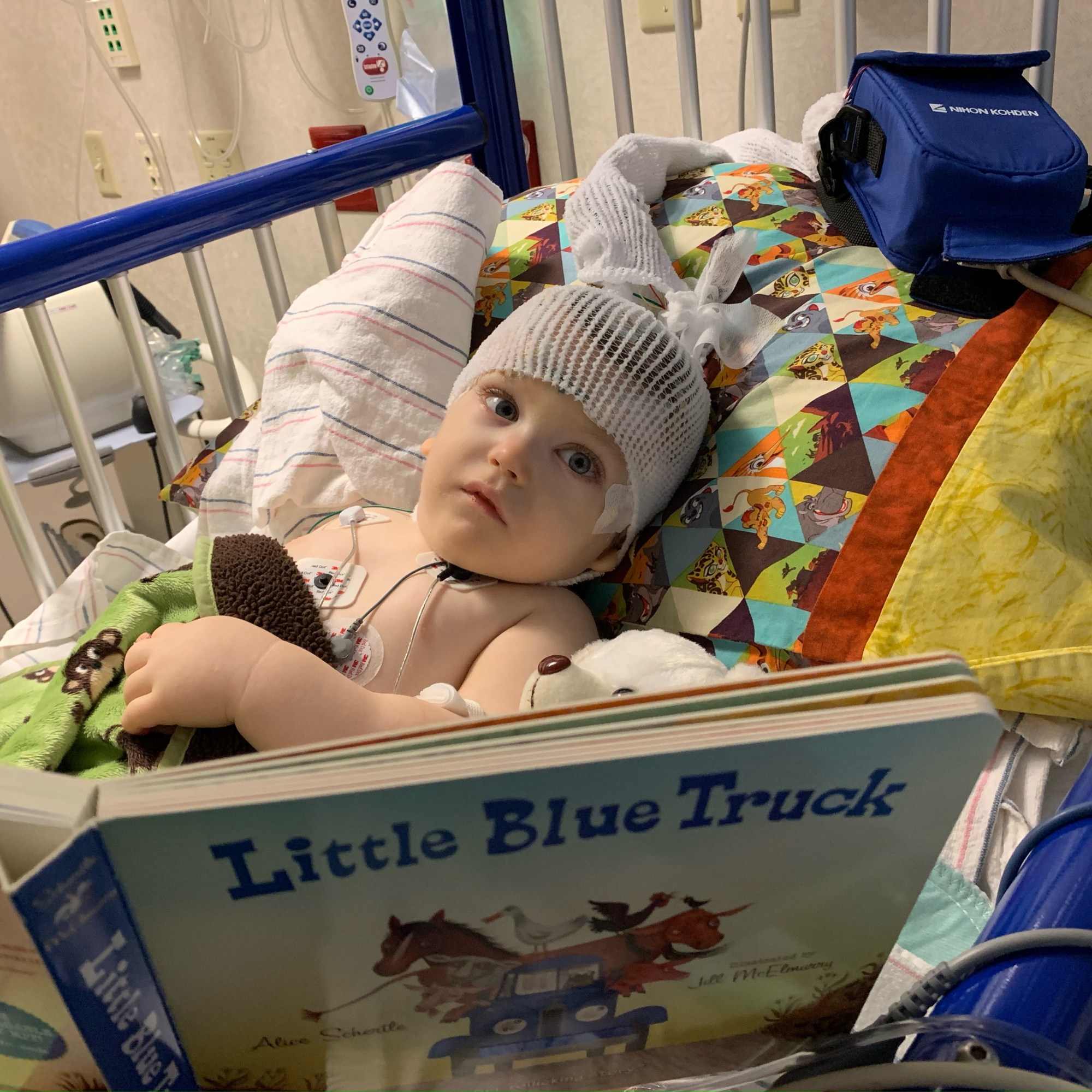
Books can be enjoyed by children of all ages and with varying degrees of alertness and responsiveness. Reading to your child will keep them stimulated and let them know you are there. Choose books from different genres to keep things interesting. If your child is awake and alert, tactile books can add some sensory input. They can access the book independently or with your help. If they are more lethargic or even sedated, reading is still a great option. Choose a picture book and show or describe the pictures, or choose a chapter book and read a chapter a day. Sometimes a familiar voice is enough to let them know they are loved and safe.
Bonding Hearts/Scent Cloths
Scent cloths are beneficial for both you and your child when you are unable to be bedside with them for any amount of time. Get at least two small pieces of cloth, one for you and one for your child. Leave one at the hospital for your child to sleep with and take one home to sleep with. Swap them so that you have each other’s scent. Hospitals sometimes get these as donations to give out. You can also find a variety on Etsy, ask a crafty friend to make some, or make some yourself.
Change of Scenery/Position
Advocate for your child’s position to be changed frequently as a way to not only prevent sores and aches, but also to prevent boredom. If the doctors approve, your child may be able to spend some time out of bed in a wheelchair, specialized seat, or even your arms. If your child uses any special seating at home, bring it to the hospital if possible as many of those seats are custom fit for your child. Things like a GoTo seat, Tomato Chair, a Bobby Pillow, or other positioners can sometimes be used right in bed to help your child sit up or experience a new position. If your child is well enough they might even be allowed to go for a walk on the unit or visit the Healing Garden if the hospital has one. Ask your child’s nurse before moving your child to make sure it is safe and always make sure a medical professional is there to help guide tubing and wires.
Crafts
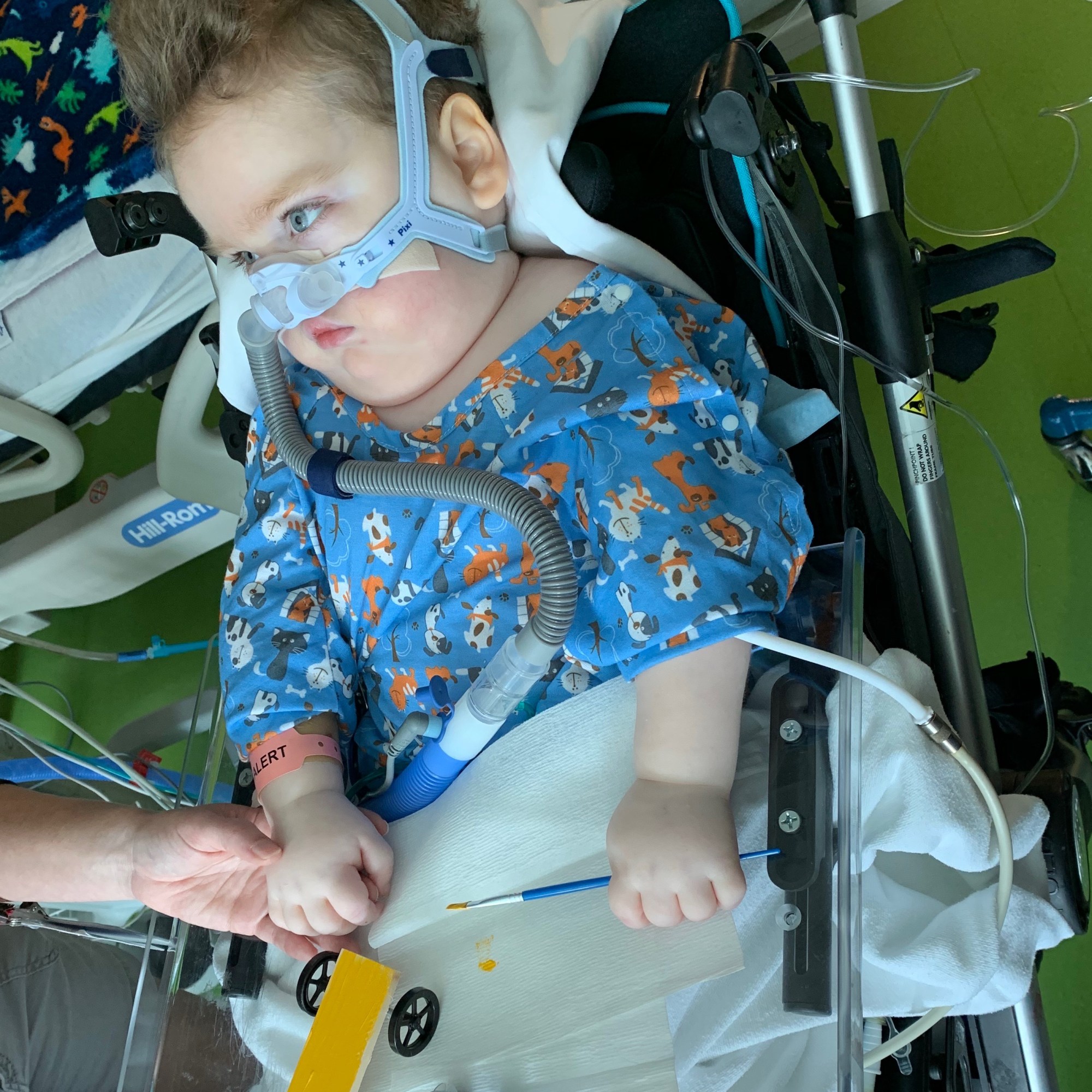
When your child is feeling well enough to sit up or get out of bed, they might enjoy some crafts. Even children with very little mobility can paint with the use of hand over hand or finger painting. Child Life can typically give you access to various materials for crafts such as paper, glue, markers, paint. Sometimes they have craft kits you can do with your child. It’s important for everyone to stay engaged and involved, so even if your child is not responsive, you can complete a craft and talk them through the steps as you do it. You can include them by simply dipping their finger in paint to add their finger print.
Lights
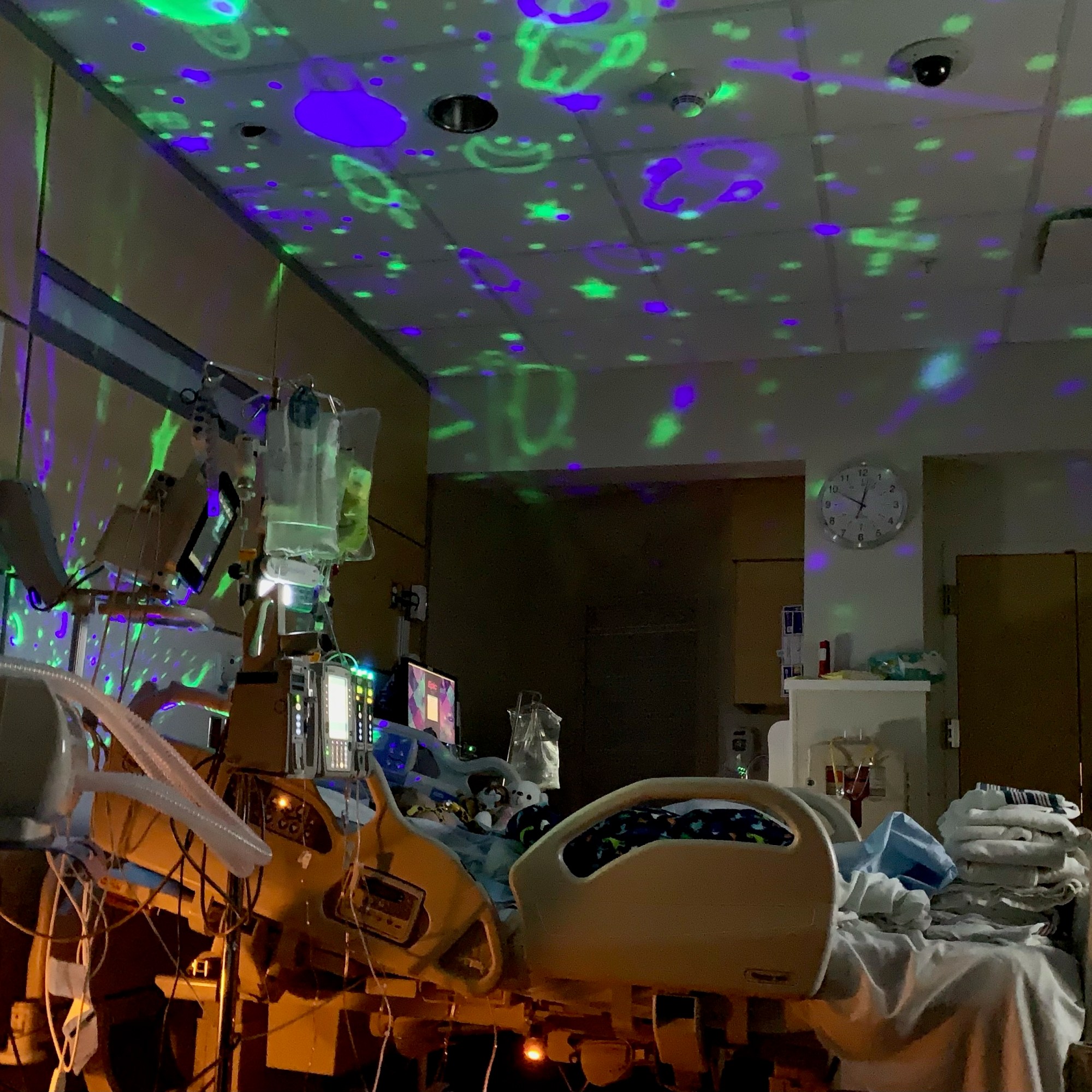
Night light projectors can be used to help relax your child (or yourself!) before falling asleep. Ask your nurse where you can plug it in so it won’t get in the way of your child’s medical needs. The Moredig Nightlight Projector works great for hospital rooms and comes with animal and space overlays.
Music
Hospitals are very noisy. Sounds can be loud, unpredictable, scary, and also just annoying. Music is a great way to drown out some of the sounds and can be used in several ways. Lively music can help cheer up a dark, sad hospital room. Soft music can be used to calm a child or help keep them relaxed. Singing to your child is a great way to comfort them or keep them engaged. Many hospitals have music channels on the television in the room. Other options are to set up a music app on a tablet or phone, or to bring a small radio or CD player. If your child is more awake and alert, you may want to play musical instruments. Bring your own from home or ask your nurse if the hospital has any you can borrow. Bells, chimes, small drums, and even guitars may be available from Child Life to borrow. Mobiles are also a great option to set up for babies and young children.
Music Therapy
Ask your child’s nurse or Child Life specialist if the hospital offers Music Therapy. Music therapists are trained professionals who use music in a therapeutic way to support patients throughout their hospital stays. They can offer a variety of supports including playing music to entertain your child, involving both children and caregivers in singing and playing instruments, playing or singing calming music to support your child before, during, or after scary or painful procedures, and playing music to help your child relax.
Photographs
For extended hospital stays, you can bring photographs from home to remind your child of their family and friends who love them. Tape photographs to your child’s bed or crib in a location that they can see. Talk to your child about the people in the photographs.
Sensory
Depending in your child’s needs, they may be exposed to a lot of scary, painful experiences in the hospital. It’s important to help them have positive sensory experiences. Weighted blankets are a great way to provide your child with some sensory input and a feeling of comfort. Scent can also provide a sense of comfort. Warmies are a good go to hospital companion because they are slightly weighted, have a gentle lavender scent, and can be warmed in the microwaved. Sensory items such as kinetic sand, Play Doh, water beads, etc. are also great to use in the hospital to give your child some positive sensory input. Check with your child’s doctor before introducing sensory items to make sure they are safe for your child.
Spa Treatment
Give your child a spa day in the hospital! Ask your nurse if you can give them a warm bath. You can braid or play with their hair. Some hospitals have volunteers who offer hair cuts to children who have extended hospital stays. If their doctor approves, you can gently rub their hands, feet, or other limbs. The occupational therapist may be able to give some pointers on massage techniques that would be safe and beneficial for your child.
Toys
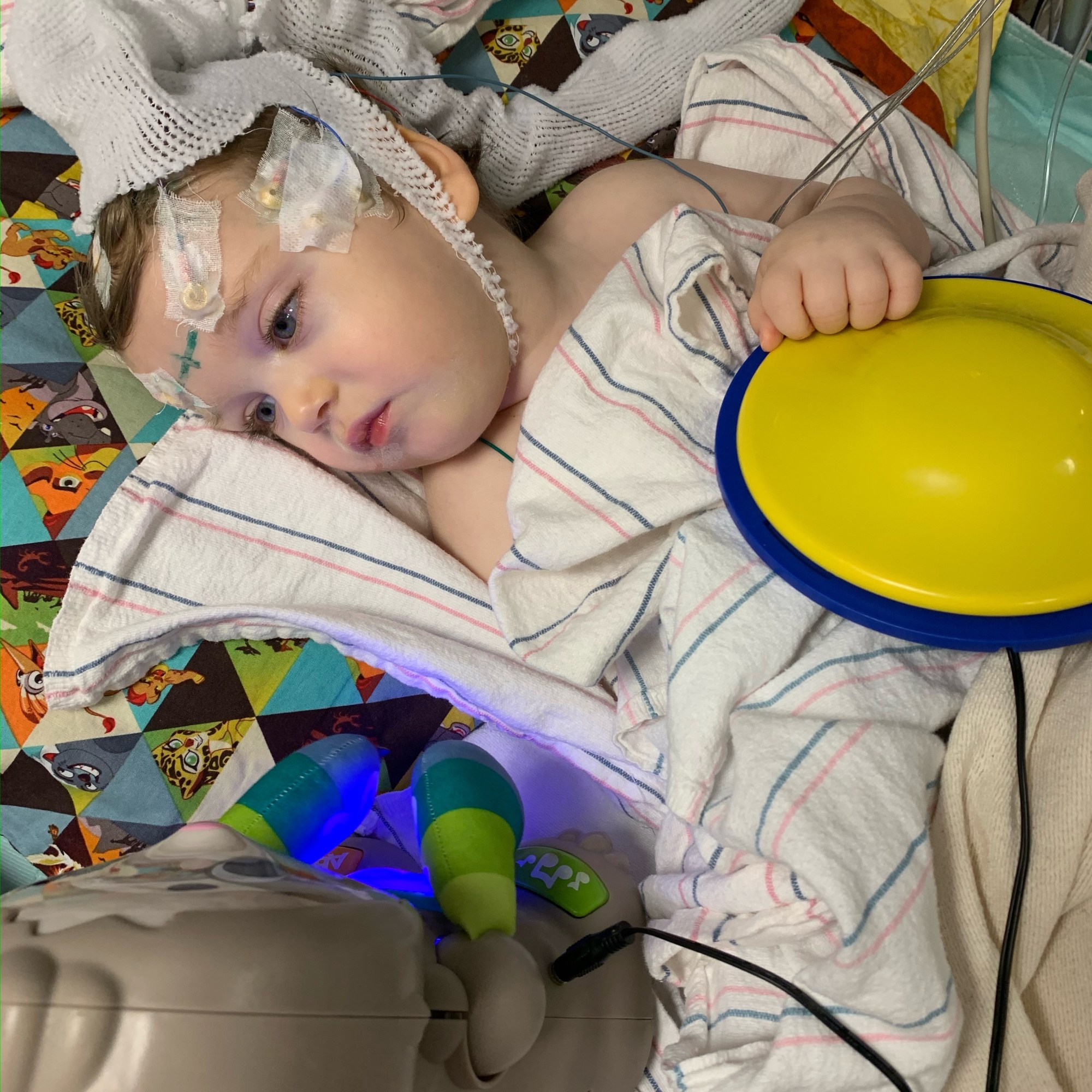
Toys can make a hospital room feel more child friendly. Familiar toys from home can help your child stay entertained. The hospital might also have toys they can give or lend to your child. If your child uses a switch to activate toys at home, bring it along. Even if your child needs some or a lot of help to activate toys, they can keep them entertained and stimulated. Change toys out every few days to keep them interested.
For Caregivers
We encourage you to be as involved as possible with your child’s care during their hospitalization, but you also need to pay attention to your own needs as well. Bring items to help keep your mind engaged.
Some suggested items:
- Puzzle books
- Coloring books
- Adult dot to dot books
- Cross stitch
- Diamond paintings
- Playing cards
- Books
- Origami paper
- Journal (good for jotting down thoughts, feelings or notes)
- Rubiks cube
It can be hard to leave your child’s bedside without worrying about them. It’s important to get at least some time outside of your child’s hospital room. Find a time when your child is resting and when the nurse isn’t too busy with other patients. Let your child’s nurse know you will be stepping away and make sure they have a good number to reach you. Some hospitals have volunteers who would love to sit with your child while you step away for a few minutes.
Suggestions for getting some time away:
- Go for a walk at least once or twice a day. Find out if your hospital has an outdoor area or healing garden. If you want to stay close you can also just take a lap on your child’s floor.
- Ask if the hospital offers support groups or information sessions for caregivers. Some even offer craft projects for caregivers.
- Walk to the cafeteria or nearby restaurant to get food.
- Step outside of the room to make a phone call to someone.
- Explore the hospital to find the gift shop, lounges you didn’t know about, or places with good views
- Look up nearby coffee shops or book stores to get out for a drive